The Central Otago Region
Central Otago is the most southerly grape-growing region in the world. Located at 45º south, it shares unique geographical and climactic conditions with some of the world’s most prestigious wine- producing regions. Burgundy and the northern Rhone in France, and Oregon’s Willamette Valley in the USA, are all at latitudes between 45º and 47º north. Although small in size, Central Otago is a rapidly developing wine region with a well-established international reputation for Pinot Noir.
Pinot Noir accounts for more than 85% of vineyard plantings, with Chardonnay, Pinot Gris and Riesling making up the majority of the remainder. Production of sparkling wine, made from Pinot Noir and Chardonnay grapes, has also been well-received internationally.
HISTORY
The first wine-making grapes were planted in Central Otago in 1864, by Frenchman John Desire Feraud. Coming from a winemaking family, he made his fortune in the Dunstan gold rush of 1862 and quickly recognised the region’s outstanding potential for grape-growing. Feraud’s stone-built winery – Monte Christo in Clyde – still survives today and his wines, sold in blue bottles that can be seen at Clyde Museum, won prizes in Sydney and Melbourne competitions. The first modern commercial wines of the region were produced in 1987, made with experimental grape plantings from around Queenstown, Wanaka and Alexandra.
THE SUB REGIONS
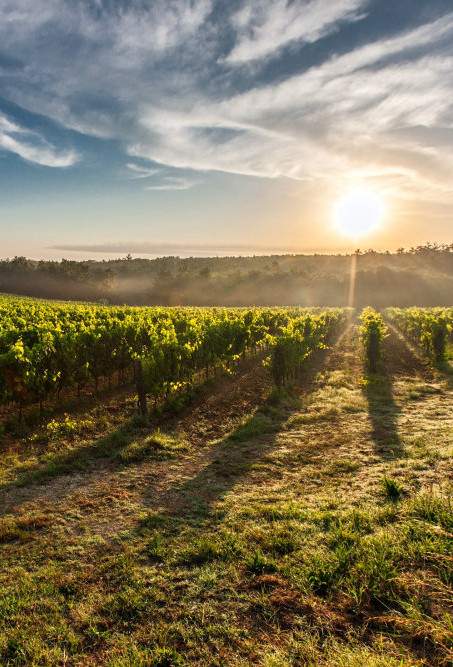
Central Otago is comprised of four distinct sub-regions, separated by mountains and deep gorges. The Cromwell Basin accounts for 70% of the region’s vineyards and includes Bannockburn in the south, Lowburn, Pisa and Bendigo to the north. A further 20% of plantings are found around Gibbston, where most vines occupy north-facing slopes and terraces above the dramatic Kawarau Gorge. In the south-west of the region are Clyde and Alexandra (7%), while the remainder (3%) are located around Wanaka, where vineyards run down to the lakeshore against a backdrop of snow-clad mountains and glaciers.
SOILS
Central Otago’s vineyards benefit from a wide variety of soils, ranging from fine sand and heavy silt loam to rocky schist. Each of these soil types has a pronounced influence on the growth of the vine and flavours of the grapes and resulting wine. In most areas, the soil is derived from loess – formed over successive ice ages as glaciers ground rocks to a fine flour – or alluvial deposits, often with underlying gravel allowing free drainage. To the west, some of the soils are developed on glacial outwash or moraine. There are even small pockets of soil formed by the hydraulic sluicing carried out by gold miners in the 19th century.
CLIMATE
Central Otago is the only area in New Zealand with a semi-continental climate – nowhere else in the country experiences greater daily and seasonal extremes of temperature. Summers are hot and dry, with autumns cool, generally dry and with cold nights. Relatively low rainfall and humidity means a low incidence of disease and rot, greatly reducing the need for spraying. The large diurnal temperature variation (the difference between daytime and night-time temperatures) during ripening contributes to flavour intensity, gives depth of colour and stability to the wines. Heavy frosts are common throughout the winter, and can also occur during spring and autumn. As a result, most vineyards are on warmer, north-facing slopes. Visitors to the region in April and May will witness harvest time, when vineyards and wineries are busy picking, sorting and crushing the fruit for the new vintage.