The Arrival of The Maori in New Zealand
Before the Maori arrived in primordial New Zealand, it was a mysterious land where the trees were filled with copious bird and insect life.
The most tuneable, melodious music filled the air as millions of creatures seemed to strain their throats to participate in this gigantic orchestra. Occasionally the booming calls of the Moa added to the exuberance and beauty of this natural sound. Giant eagles could be seen soaring and circling, their superiority of the skies totally unchallenged. It was to this ancient, forested kingdom, surrounded by 18,000 km of coastline, home to abundant fish species, bird life.
THE ARRIVAL OF THE MAORI IN NEW ZEALAND
Before the Maori arrived in primordial New Zealand, it was a mysterious land where the trees were filled with copious bird and insect life.
The most tuneable, melodious music filled the air as millions of creatures seemed to strain their throats to participate in this gigantic orchestra. Occasionally the booming calls of the Moa added to the exuberance and beauty of this natural sound. Giant eagles could be seen soaring and circling, their superiority of the skies totally unchallenged. It was to this ancient, forested kingdom, surrounded by 18,000 km of coastline, home to abundant fish species, bird life.
From whence they came?…and why?…has led to much speculation, although, thanks to well preserved evidence of material culture, there is no doubt the major source of Polynesian immigration to New Zealand was the islands of East Polynesia. Whatever the answer, the Great Maori migration to New Zealand, is a source of fascinating interest.
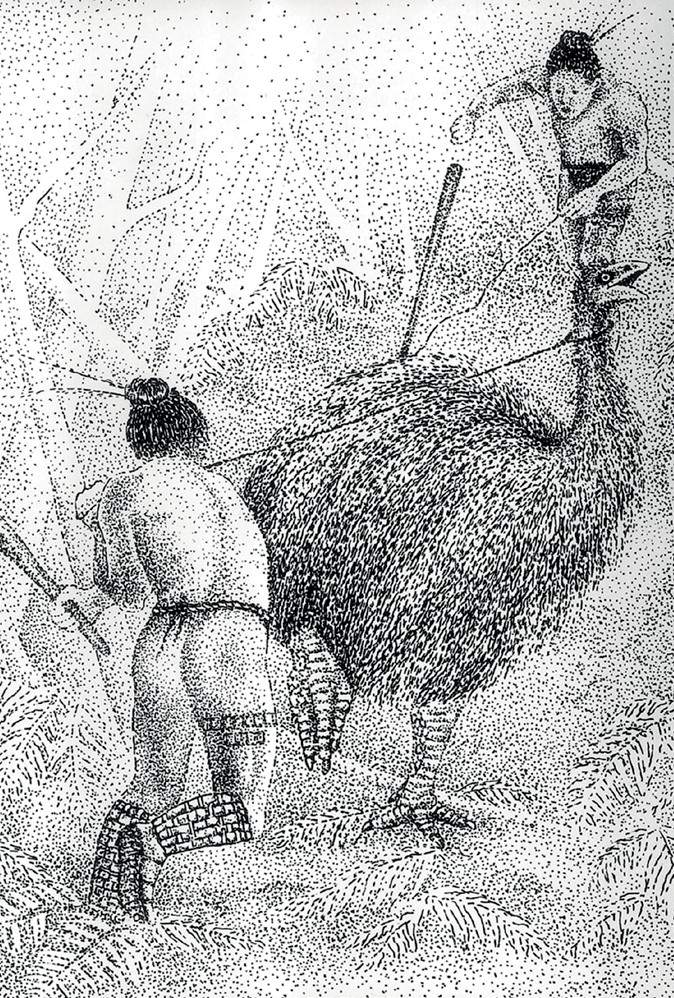
Some reputable historians say they came from Rarotonga in the Cook Islands, and from Tahiti and Raiatea in the Society Islands, in sea voyaging canoes over a period of several centuries, the last arrivals making landfall over six hundred years ago. The canoes of the last migration period may have come to New Zealand singly or at most, in pairs as double canoes, but however they came or whenever they came, it has been convenient to refer to these as the canoes of the “Great Fleet”. The Polynesians who came in many, many canoes at different times from as early as A.D.600 to as late as A.D.1350 came to call themselves the Maori. At first they were fishermen, fowlers, and hunters of the various species of the huge and now extinct Moa bird. Leading a nomadic life, they lived where they could find food, warmth, and shelter. According to their tradition, the kumara which became the most important vegetable of the Maori, was not brought to New Zealand until the last migration period (1300-1350).
Its introduction changed the life of the Maori from that of the nomadic hunter, to that of a more permanent way of life in settled communities. Both men and women of the Maori race were of fine physique and handsome features – they were people of high intelligence, courage and initiative, with a great love and appreciation of nature. Because of these attributes they evolved into a nation of orators, singers, carvers of great skill, weavers and builders. In time they lived in stockaded villages or pas.
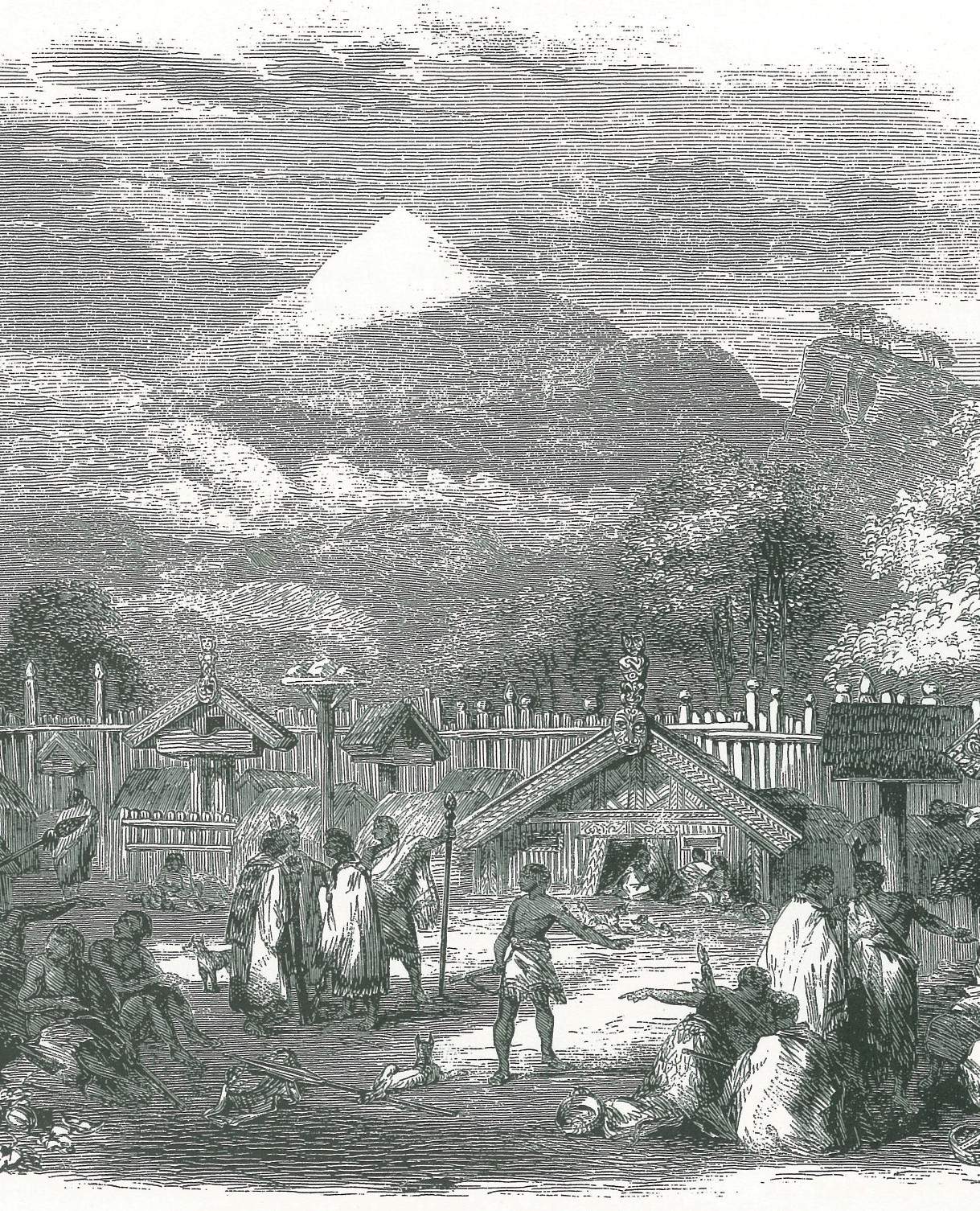
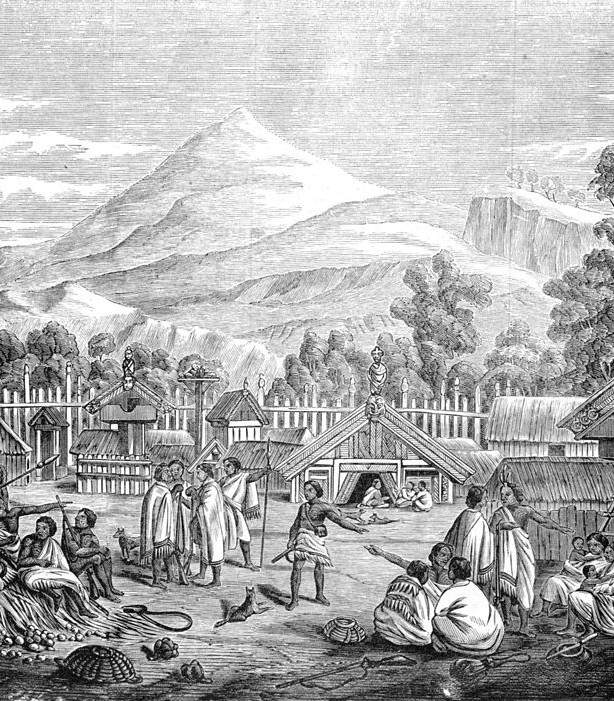
Each tribe had an entity, and owned the land in the area in which they lived. The construction of their houses and forts was a marvel of original thinking and inventiveness. The design of the carved panels which ornamented their chief’s and communal buildings revealed an artistry and creativity that is now acknowledged by expert observers from many countries to be the highest form of Polynesian art. The source of their inspiration was often drawn from nature, though many had ancestral and traditional origins.
The Maori people have a vivid and imaginative way of expressing their thoughts, and with a vocabulary of 30,000 words, it is no wonder that they have produced many great speakers and poets. The high level of culture which the Maori developed in complete isolation is universally acknowledged, and is a tribute to his intellectual and artistic qualities, and not least to his ingenuity in adapting to a colder and more rugged environment, by which he ensured not only his survival, but by shaping these conditions to his needs and purposes, greatly improved his manner of life. This culture was flourishing at the time of Captain Cook’s first visit in 1769 and is generally referred to as “The Classic Period of Maori Culture”