The History of Queenstown
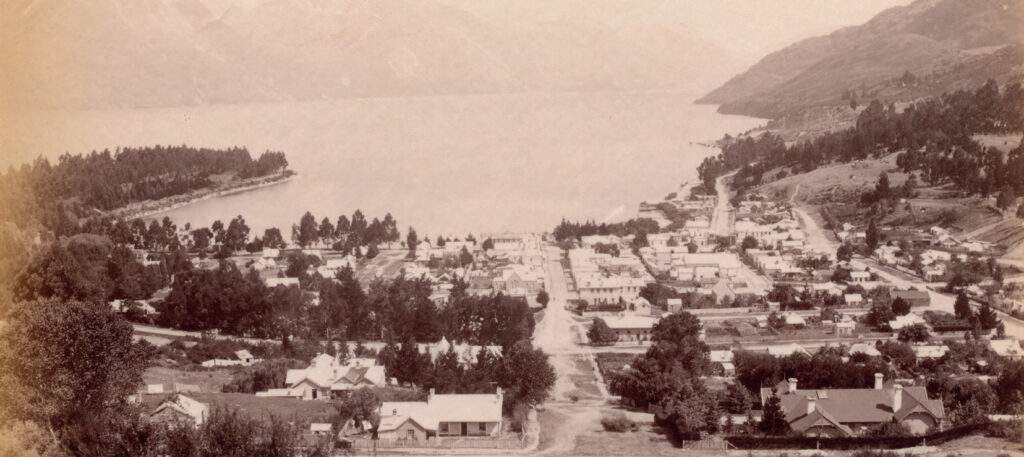
Tourism is not a new phenomenon in the Wakatipu area, it has been here almost as long as European settlement. The early explorers and settlers recognised the area’s beauty and the infrastructure established for the gold mining industry made it relatively easy for the first tourists to get to Queenstown.
Tourism focused initially on the head of the lake at Kinloch and Glenorchy in the mid 1870’s. The railway from Dunedin to Kingston built in the late 1870’s brought Queenstown within reach of the rest of New Zealand.
The History of Queenstown & The Wakatipu Basin
Natural and induced fires in pre-European times and later burn offs by runholders had, by the turn of last century, reduced a once extensive beech and broadleaf forest to a few remnants in damp gullies. After fire, bracken is the usual pioneer species, followed by manuka and, if burning isn’t repeated, this becomes an excellent nursery for native trees and shrubs. The vegetation on the Seven Mile Point Track is a good example of this natural succession.
Lake Wakatipu is unique in New Zealand lakes as its level rises and falls throughout the day. This fluctuation of about 20 cm in Queenstown Bay is called a seiche. It’s thought to be caused by variations in temperature and atmospheric pressure. Southern Maori describe this as the heartbeat of the giant, whose body forms the lakebed – his head at Glenorchy, knees at Queenstown and feet at Kingston.
The lake is basically an ice-scoured trough with an average depth of 360 metres. Above this the glaciers once rose as much as 1,000 metres above the lake’s present level. The glacier retreated at the end of the last ice age and the streams formed since then have deposited a lot of gravel along the lake’s shores.
Human History – from Maori to the first European Settlers
Maori hunters first came here from coastal settlements in Southland and Otago, in search of food – including the large flightless moa – fibre, and stone. The Pounamu (greenstone) deposits in the Dart Valley were a major attraction. Pounamu was also brought over the mountains from the west coast. Expeditions into the area continued until the middle of the 19th century, with a major encampment on the banks of the Dart River, just below the present-day bridge.
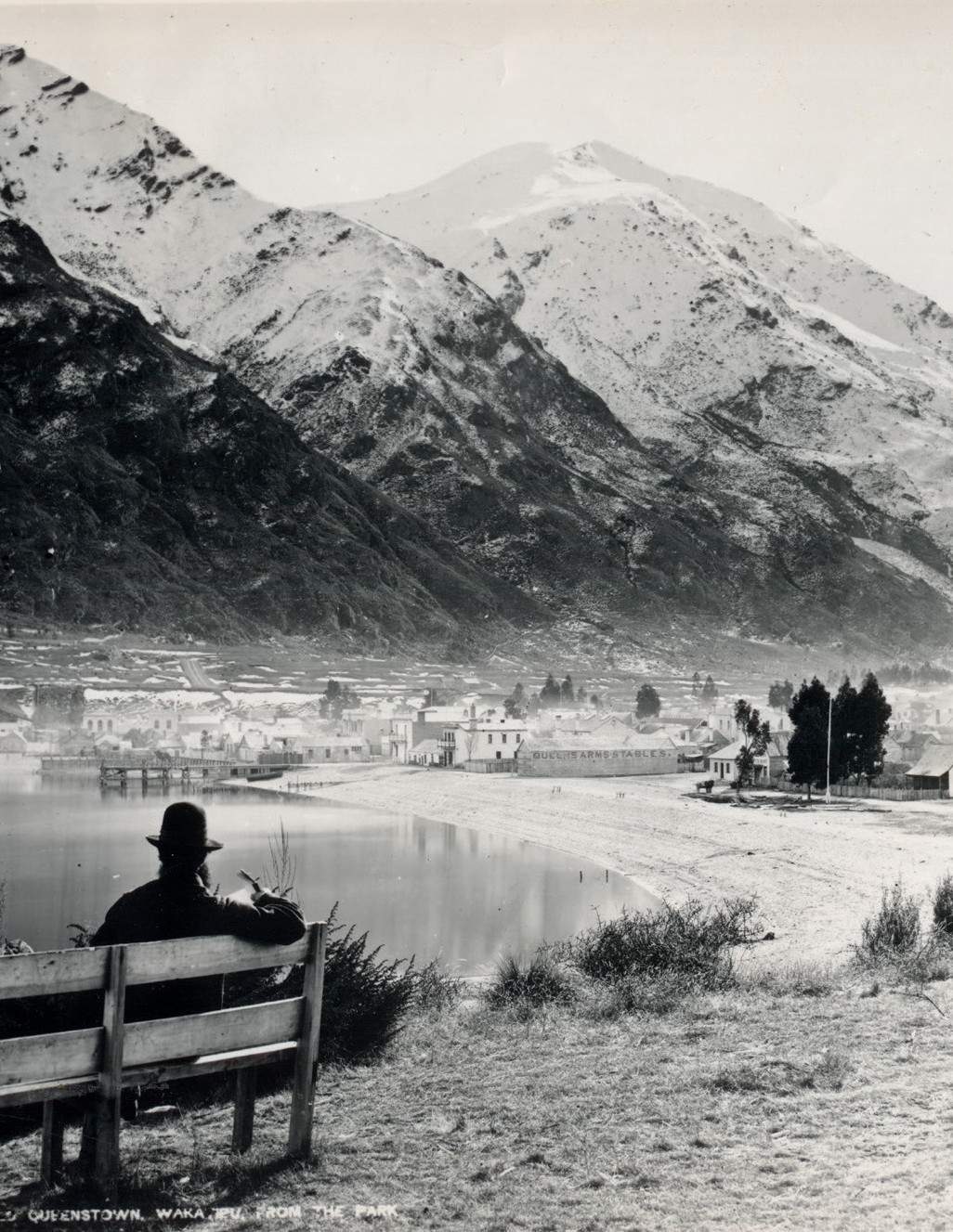
In 1860 Messrs William Rees and Nicholas Von Tunzelman, after whom the Rees and Von Rivers are named, were the first pastoralists to take up land around the lake. Legend has it that at White’s Point – west of Bob’s Cove – they tossed a coin to see who would apply for the Queenstown Bay run. Rees won and by October 1862, when he had settled at Queenstown Bay, gold was discovered in the nearby Arrow/Haehaenui River. The Shotover/Kimi Akau River gold rush began the following month. By 1863 gold mining was in full swing and Queenstown was a flourishing mining village.
At the height of the gold rush, transport to Queenstown was chiefly by boat from Kingston, and the stately twin-screw steamer, Earnslaw, is an echo of those days. Commissioned in 1912, the Earnslaw maintained a regular service for the sheep stations bordering the lake. And prior to the opening of the Queenstown-Glenorchy Road, regular stopovers and picnic excursions to Bob’s Cove were serviced by lake steamers.
The Development of Tourism in Queenstown
Tourism is not a new phenomenon in the Wakatipu area, it has been here almost as long as European settlement. The early explorers and settlers recognised the area’s beauty and the infrastructure established for the gold mining industry made it relatively easy for the first tourists to get to Queenstown.
Tourism focused initially on the head of the lake at Kinloch and Glenorchy in the mid 1870’s. The railway from Dunedin to Kingston built in the late 1870’s brought Queenstown within reach of the rest of New Zealand.
During the early time of tourism the critical visitor period was Summer, many local hotels and business’s closed for the winter and with only ice skating and snow covered mountains on offer it proved an insufficient lure for visitors.
But with the opening of new roads and the coming of the motor car the situation slowly changed , the road from Kingston to Frankton opened in 1926 and by 1934 Queenstown could be reached in one day by road from Christchurch with the opening of the Lindis Pass road.
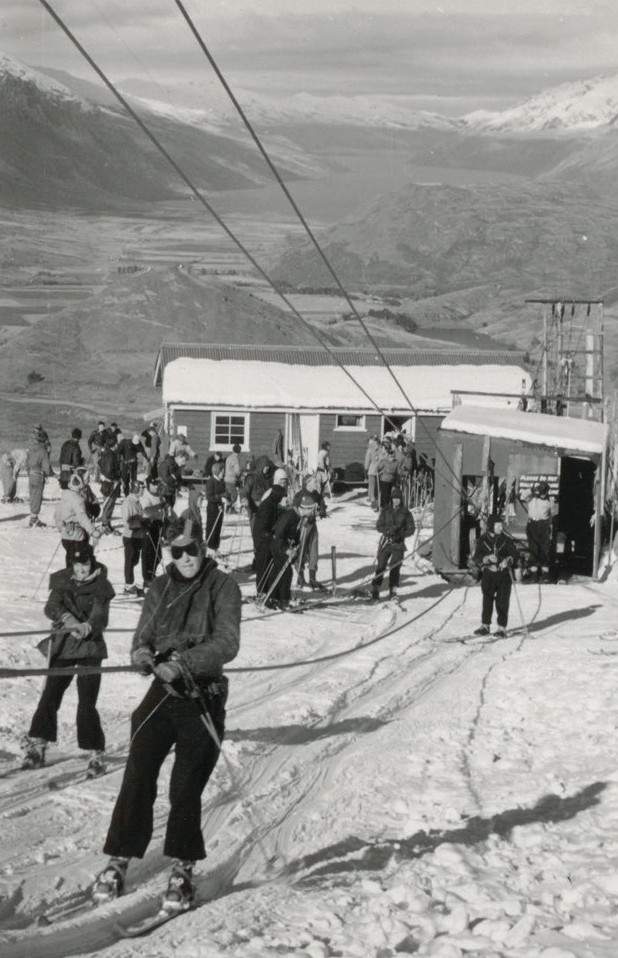
By the late 1930’s there was a growing interest in skiing, by 1947 huts and a tow rope had been erected at Coronet Peak and this was to be the first ski area opened in New Zealand. Skiers flocked to the mountain from all over New Zealand and Australia and it was at this point that Queenstown began to develop as an all year round destination. The growth in tourism in Queenstown since 1950 has been extraordinary and today is Queenstown’s primary industry.
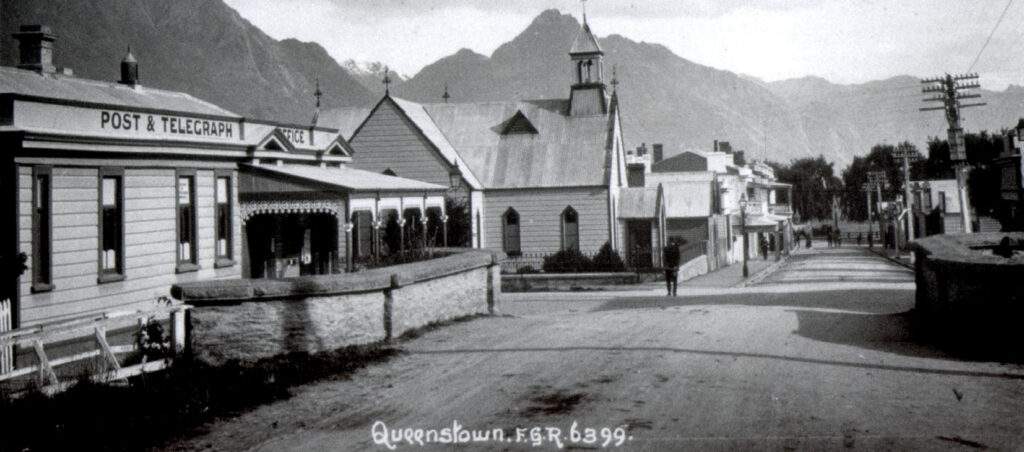
View down Ballarat St/Queenstown Mall. The Bridge is still there today, c.1906.
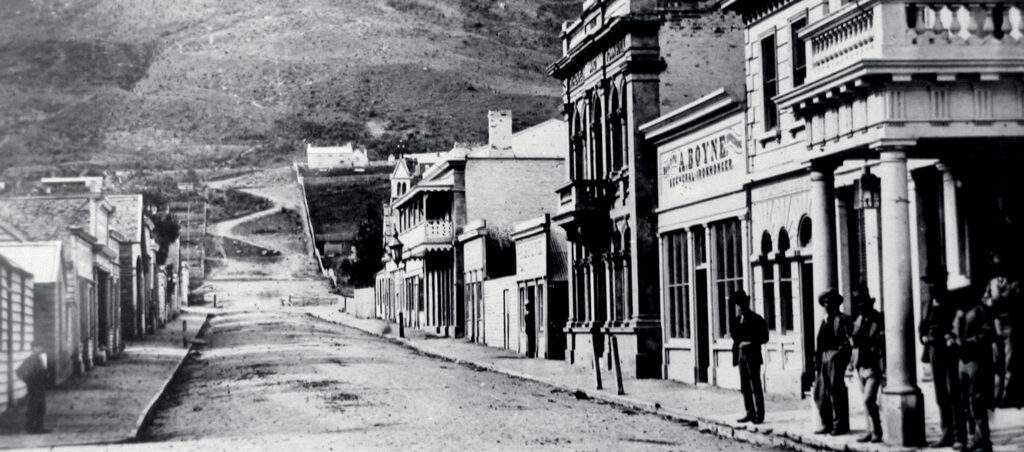
Queenstown Mall, looking up to Ballarat Street. Eichardts Hotel can be seen on the right, c.1880.